SMM Panel vs Paid Ads: Where Should You Spend First?
Articles are shown in their original language.
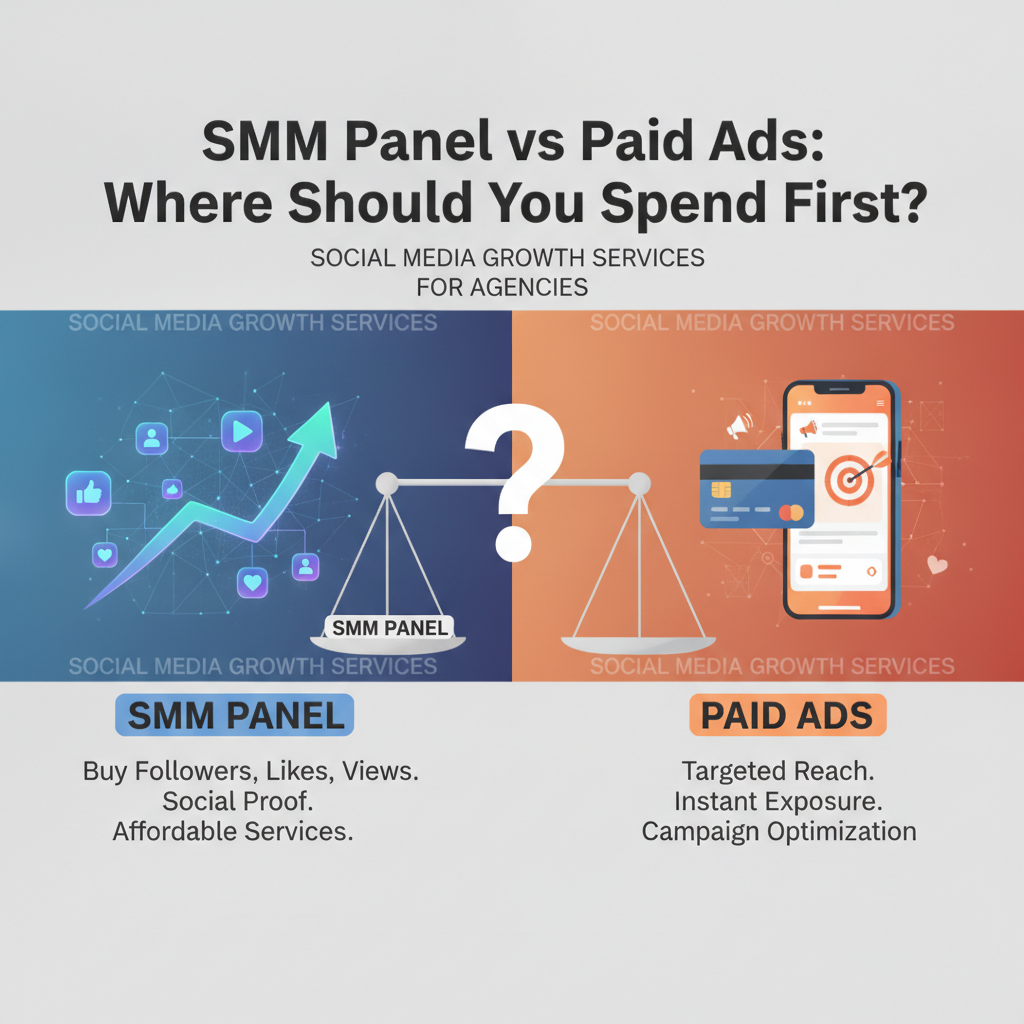
SMM Panel vs Paid Ads: Where Should You Spend First?
Every creator, agency, and small business eventually hits the same wall: money is limited, growth is slow, and two obvious options sit on the table. You can boost a post and pay for reach, or you can open an affordable SMM panel and order social proof directly. Most advice online treats these as either/or, but that thinking leaves money on the table. Here is a practical breakdown of what each approach really does, what it costs, and how to sequence them so every dollar works harder.
What an SMM Panel Actually Does (and Doesn't Do)
An SMM panel is a self-service platform where you can order followers, likes, views, comments, and engagement services across Instagram, TikTok, YouTube, X, Telegram, and more. When you place an order, the panel routes the request through service providers and delivers the engagement to your profile usually within minutes or a few hours. You are buying social signals that make your profile look more active and credible to visitors.
A panel does not create content, grow your audience through interest, or bring in qualified buyers. What it does well is close the perception gap. A profile with 50 followers and no comments looks like a ghost town. That same profile with a few hundred followers and visible engagement looks like someone worth following. The social proof does not replace strategy; it supports it.
What Paid Ads Actually Do
Paid advertising on Instagram, TikTok, or YouTube puts your content in front of people who match a targeting profile you set. Ads are built for reach, impressions, and conversions. If your goal is to sell a product, drive signups, or bring cold traffic to a landing page, paid social is the direct path.
But ads have a trap for small budgets. A $20 boosted post might generate a few hundred impressions and very few follows. When you run ads to a profile that already has weak engagement numbers, the click-through rate suffers and the cost per result climbs. Platforms show your content to more people when it is already performing well. Fresh profiles and low-engagement accounts often pay a premium for the same results.
The Real Cost Comparison
Let us look at this from a practical angle. On most platforms, a boosted post that gets meaningful reach will cost more than most people expect. You are paying for every impression, click, or conversion, and the algorithm decides what you pay based on competition in your niche.
An SMM panel, on the other hand, operates on bulk service pricing. The cost of ordering a follower increase starts at fractions of a cent per unit through wholesale services. That means the same amount you might spend on one boosted post can buy a meaningful layer of social proof across multiple platforms. Panel.rip, for example, serves over 5,000 clients and fills over 21,000 orders with a service catalogue of 350+ options across 67 categories, which shows how much volume the panel model supports at scale. This is not about which one is "better" in some abstract sense, but about which one solves the problem you face right now.
When an SMM Panel Makes the Most Sense
An SMM panel is the smart first move when you need credibility before you have audience. Specific scenarios include:
- Brand new accounts. Nobody follows an empty profile. A small follower and engagement layer helps new profiles look established.
- Launching a product or channel. Before you push paid ads to a channel with 10 subscribers, give it a visible base.
- Client reporting for agencies. Agencies often need to show client profiles looking healthy while content strategies ramp up.
- Reseller testing. If you are evaluating services, panels let you test delivery quality and retention without committing to ad budgets.
- Content credibility. When brands check your profile before a collaboration, visible engagement matters more than raw follower count.
When Paid Ads Are the Right Call
Paid advertising wins when you have content worth amplifying and you want specific outcomes. If your post already gets natural engagement, a boost can scale that signal to a broader audience. If you are running a product launch or a lead campaign, ads give you targeting and measurement that an SMM panel cannot.
The mistake is running ads too early. When brands, customers, or potential partners click your ad and land on a profile that looks inactive, the budget is wasted. The social proof layer should already be in place before the ad spend begins.
How to Layer Both Without Wasting Money
Here is a simple step-by-step sequence that combines both approaches without conflict:
- Build the base. Order a small batch of followers, likes, and views on your primary platform so the profile looks real and active.
- Publish consistently. Create 5 to 10 pieces of content with hooks that work in your niche. Give the social proof something real to attach to.
- Let organic signals settle. Give the platform time to index your activity and let natural engagement begin.
- Test with a small ad budget. Boost your best-performing post with $10 to $20 and watch the engagement rate.
- Scale what works. If the post converts, put more budget behind it. If it does not, refine content before spending more.
- Refresh social proof. Use the panel to maintain a consistent engagement-to-follower ratio, especially on newer posts.
Mistakes to Avoid When Combining Both
- Buying followers and skipping content. A high follower count with zero recent posts looks worse than a smaller but active profile.
- Boosting weak content. Ads multiply whatever signal your post already has. If the post gets no engagement, boosting just pays for a bigger flop.
- Ignoring delivery quality. On a panel, check service ratings and retention. Services with refill options handle drop-off better than raw services with no support.
- Spending the full budget at once. Split-test small amounts instead of committing to a large campaign on an unproven profile.
- Assuming one replaces the other. SMM panels build proof; ads build reach. They solve different problems and work best together.
SMM Panel vs Paid Ads: A Quick Decision Guide
If your profile looks thin and you need credibility, start with an SMM panel to build the engagement layer. If your profile already looks credible and you need traffic or conversions, shift focus to paid ads. If you can afford both, layer them: proof first, reach second.
For creators testing growth strategies and agencies managing multiple client accounts, this sequencing matters even more because repeatability matters. A panel gives you predictable per-unit pricing and fast turnaround. Ads give you targeting but demand ongoing spend to maintain results.
FAQ
Can I use an SMM panel and run paid ads at the same time?
Yes. In fact, they complement each other. The social proof from panel services improves the perception of your profile, which helps ad click-through rates and conversion quality. Just make sure content is consistent.
Is an SMM panel cheaper than paid advertising?
Per unit of engagement, yes. Ordering followers, likes, and views through a panel costs significantly less per interaction than running boosted posts. However, ads deliver reach and targeting that a panel cannot. Compare cost per objective, not just price per unit.
Does a panel help my paid ads convert better?
It can help indirectly. When people click your ad and see a profile with active engagement and visible followers, they are more likely to follow or buy. Social proof lowers the friction that makes ads underperform.
How much should I spend on an SMM panel versus ads?
A good starting ratio is 70% on the panel for building proof and 30% on ads for testing reach, then adjust based on what converts. If your content already performs well organically, flip the ratio toward ads.
Should resellers and agencies use SMM panels instead of ads?
Agencies and resellers typically manage many client accounts at once, so panels offer the volume and margin control ads cannot. Ads are more useful as a client service add-on rather than a replacement for panel infrastructure.
Final Take
Stop thinking of an SMM panel as a shortcut that competes with advertising and start seeing it as the foundation ads stand on. A solid social proof base makes every dollar of ad spend work harder, and ads bring the targeting that social proof cannot. When you get the sequence right, an affordable SMM panel and a small ad budget create a growth loop that performs far better than either alone. If you are ready to build the social proof layer first, explore the service catalogue at Panel.rip services and start small.
