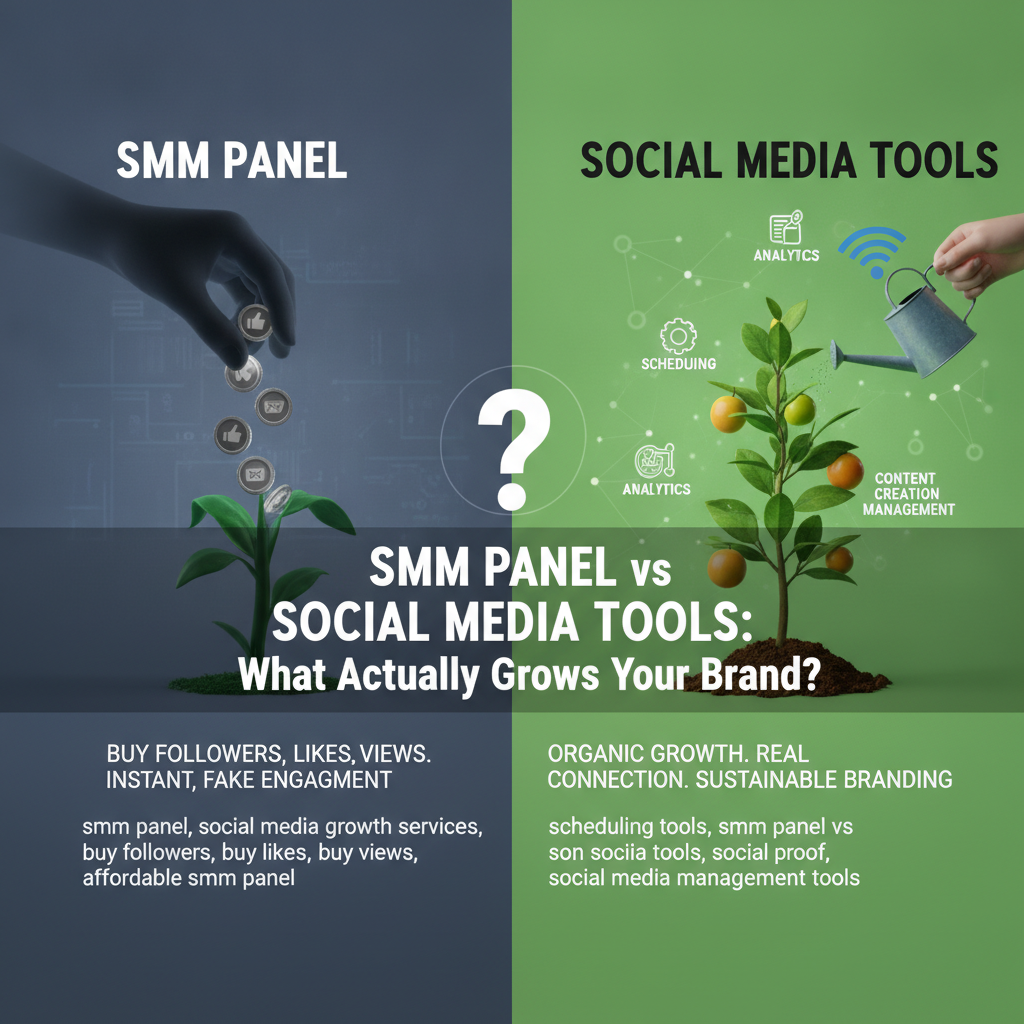
SMM Panel vs Social Media Tools: What Actually Grows Your Brand?
If you've searched for "SMM panel" this week, you've probably also seen results for Buffer, Hootsuite, Later and a dozen other social media management tools. Both promise to grow your presence — but they do completely different jobs. One helps you schedule content. The other helps you build social proof on that content. Understanding which one you actually need (or whether you need both) is the difference between spending your budget wisely and throwing money at the wrong tool.
What an SMM Panel Actually Does
An SMM panel is a marketplace where you order engagement services — followers, likes, views, comments and subscriber packages — for platforms like Instagram, TikTok, YouTube, X/Twitter, Telegram and more. You add funds to your balance, paste a public post or profile link, and place the order. The panel delivers the engagement over a set period, often using drip-feed delivery so the growth looks gradual rather than sudden.
For example, a creator with 300 followers who wants to look credible enough for brand outreach might use an SMM panel to build a base of social proof while they keep posting consistently. An agency managing ten client accounts might rely on an SMM panel to keep each client's engagement numbers moving between content campaigns.
Executing an order is straightforward. But knowing which services fit your goal — and how to layer them without looking artificial — is the part that actually matters.
What Social Media Management Tools Do
Tools like Buffer, Hootsuite, Later and Sprout Social are built for content operations. They let you plan a content calendar, auto-publish posts across platforms, collaborate with team members and pull analytics reports. They are essentially productivity software for managing the publishing side of social media.
They do not add followers, and they do not increase likes or views on your content. A scheduling tool can help you publish consistently — which is valuable — but it cannot make your latest post look credible to a potential brand partner or client.
SMM Panel vs Scheduling Tool: The Real Comparison
Here's the honest breakdown:
What scheduling tools do well
- Automate posting across platforms so you never miss a slot
- Give you a visual content calendar for planning
- Provide analytics on reach, engagement rate and audience growth
- Help teams collaborate on approval workflows
What they do not do
- Increase your follower count
- Add likes or views to published content
- Make your profile look more active when you're just starting out
- Provide social proof for external audiences who check your metrics before deciding to work with you
What an SMM panel does well
- Delivers followers, likes, views and comments directly to your public content
- Helps new accounts look more established in a short window
- Supports engagement goals across multiple platforms from one dashboard
- Gives resellers and agencies wholesale access to services they can resell to clients
When You Should Use Each One
The right answer for most people is both — but in different phases of growth.
You need a scheduling tool when you have a consistent content pipeline and want to spend less time on manual posting. Teams and agencies also benefit from scheduling tools for client workflows and reporting.
You need an SMM panel when your content is good but nobody is seeing it yet, when you're pitching brand deals with low numbers, when you're launching a new account that needs a credibility baseline, or when you're a reseller or agency buying engagement services at wholesale rates for your clients.
If you only use a scheduling tool, you'll publish great content into a vacuum with no visible traction. If you only use an SMM panel, you'll have engagement numbers but no real audience retention. That's why creators who treat this seriously pair consistent posting (managed by scheduling) with social proof building (managed through an affordable SMM panel).
How to Build a Growth Stack That Uses Both
Here's a practical checklist for combining the two effectively:
- Plan your content for 2–4 weeks using a scheduling tool so your publishing pipeline stays full.
- Identify the posts you want to promote — usually your best-performing or most important content.
- Order targeted engagement on those posts through your SMM panel, choosing drip-feed delivery where available so growth looks natural.
- Monitor engagement rates — if your ratio of likes to followers is wildly off, adjust your strategy.
- Repeat monthly with a mix of organic reach and supported engagement rather than relying on one tactic alone.
Mistakes to Avoid When Mixing Both Tools
Buying engagement before you have a content strategy. Social media platforms prioritize watch time and engagement quality. If you boost dead content, the numbers won't help. Always have at least a basic posting cadence before spending on engagement.
Treating scheduling tools like growth tools. Hootsuite and Buffer are operational software, not engagement providers. Expecting them to grow your audience is like expecting a calendar app to write your posts.
Over-ordering on new accounts. Dropping 5,000 followers on a brand-new profile looks suspicious and can attract platform attention. Start with smaller packages and build gradually.
Ignoring internal analytics. Both tools give you data. Scheduling tools show you when your audience is active. Panels show you what's being delivered. If your analytics contradict your spend, change course.
Forgetting the human side. Social proof helps, but replies, community building and real conversations are what convert followers into customers or collaborators.
Frequently Asked Questions
Can an SMM panel replace a social media management tool?
No. They serve different purposes. An SMM panel delivers engagement to your content, while a scheduling tool manages your publishing workflow. Most successful creators and agencies use both.
Do scheduling tools help you get more followers?
Only indirectly. Consistent posting can help you get discovered over time, but scheduling tools do not directly increase followers, likes or views. That's what engagement services through an SMM panel are for.
What should a beginner buy first — a scheduling tool or an SMM panel?
Start by building a posting habit manually. If you can post consistently on your own, move on to an SMM panel to build initial social proof. Add a scheduling tool later when you're managing multiple platforms or a team.
Is it safe to use both at the same time?
Using both is normal practice. Just make sure your SMM panel uses gradual delivery and realistic service quality, and keep your engagement ratios consistent with your account size.
Can resellers use SMM panels instead of scheduling tools?
For resellers, the SMM panel is the core business tool — you buy wholesale and resell to clients. Scheduling tools are a separate layer for your own content operations.
Ready to Start Building Social Proof?
If you're ready to complement your content strategy with affordable engagement services, explore the services on Panel.rip. With a catalog spanning Instagram followers, TikTok views, YouTube subscribers, Telegram members and more across 67 service categories, it's built for creators, agencies and resellers alike. You can create an account in minutes — no password or access to your social accounts is ever required.
The bottom line is simple: your content is your product, but social proof is what gets people to open the door. A well-chosen SMM panel helps you look credible while you keep publishing. Scheduling tools keep your pipeline clean. Use both thoughtfully, and your growth strategy will actually have a foundation to build on.
